The Poetry and the Pity
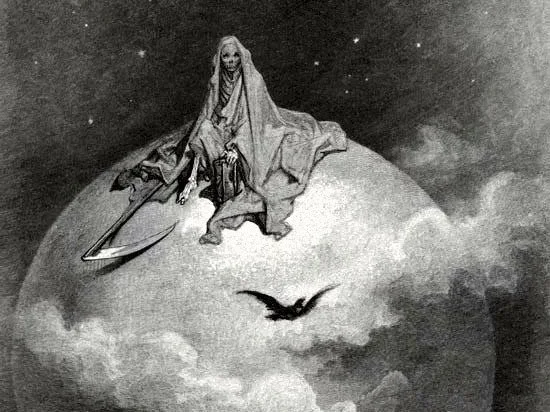
Not all dreams are pleasant and some corners of life carry horror and terror in equal measure. This essay is the first in my Nightmare series, which will weave in and out of my writing over the next few months. As I returned to Wilfred Owen’s Dulce et Decorum Est after many years, I realized very quickly that there was much terrain to cover with this poet. With apologies to the experts, this piece is but the beginning.
Sunt lacrimae rerum et mentem mortalia tangunt
There are tears of things and mortal affairs touch the mind (Aeneid 1.462)My subject is War, and the pity of War.
The poetry is in the pity (Wilfred Owen: Preface)
I discovered Wilfred Owen and his poem Dulce et Decorum Est as a school girl in an English classroom long ago on a sunny afternoon. I recognized him instantly, just as I did Virgil, as a poet who carried within himself an empathy bone-deep; a sympathetic understanding of the sorrow which pervades our human experience.
Although I did not go on to study the poet or the period in more detail, my love of the ancient world took precedence, nonetheless the poem stayed with me, in a dark room of my mind. Whenever I thought about the Great War, the overwhelming sorrow I’d felt in that Manchester schoolroom resurfaced.
In recent years my historical interest has found expression in the study of both World Wars, with a particular focus on the Shoah. I have also returned to World War I, in part because so many of the literary figures whose work I’m reading were touched by it, in one way or another. Currently, I find myself fascinated and appalled in the midst of Niall Ferguson’s WWI history, The Pity of War, whilst simultaneously teaching this period to our daughter. And so we come to Wilfred Owen.
Wilfred Owen (1893-1918) was an educated and sensitive young man. A voracious reader, he had begun to write poetry by the age of eighteen and was a devotee of John Keats. We know that in September 1911 he spent two hours ‘in subdued ecstasy’ at the old British Library reading room at the British Museum pouring over two of John Keat’s letters and two books of manuscript poems.
[His] writing is rather large and slopes like mine – not at all old fashioned and sloping as Shelley’s is. He also has my trick of not joining letters. (WO Collected Letters)
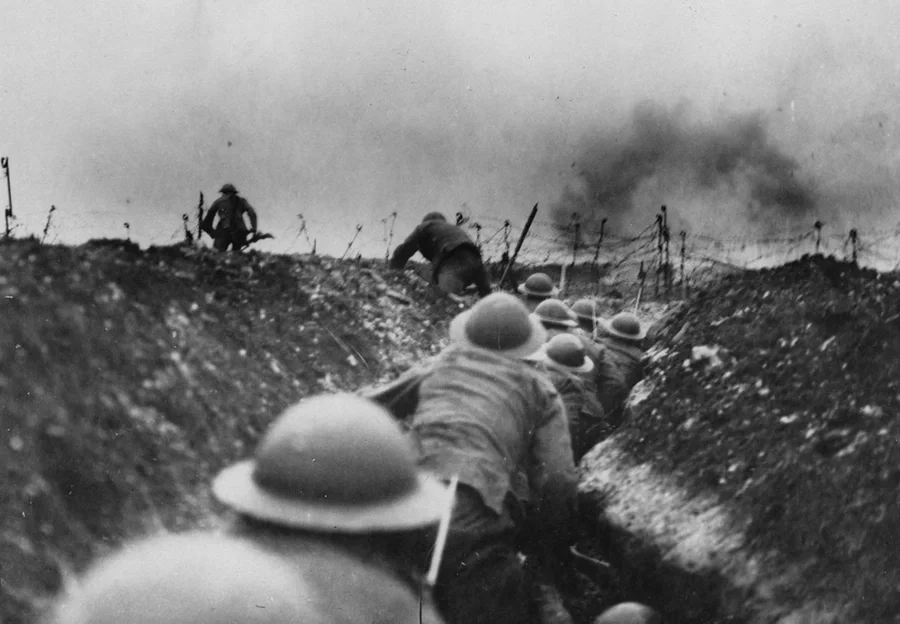
He was teaching in France when the war broke out. Returning to England in September 1915, over a year after the UK had entered the war, Owen was initially unsure as to whether he should enlist. However he signed up in October 1915 and was given the rank of second lieutenant in the Manchester regiment. As such he was a junior officer, leading men in the trenches and crucially, living and fighting alongside them.
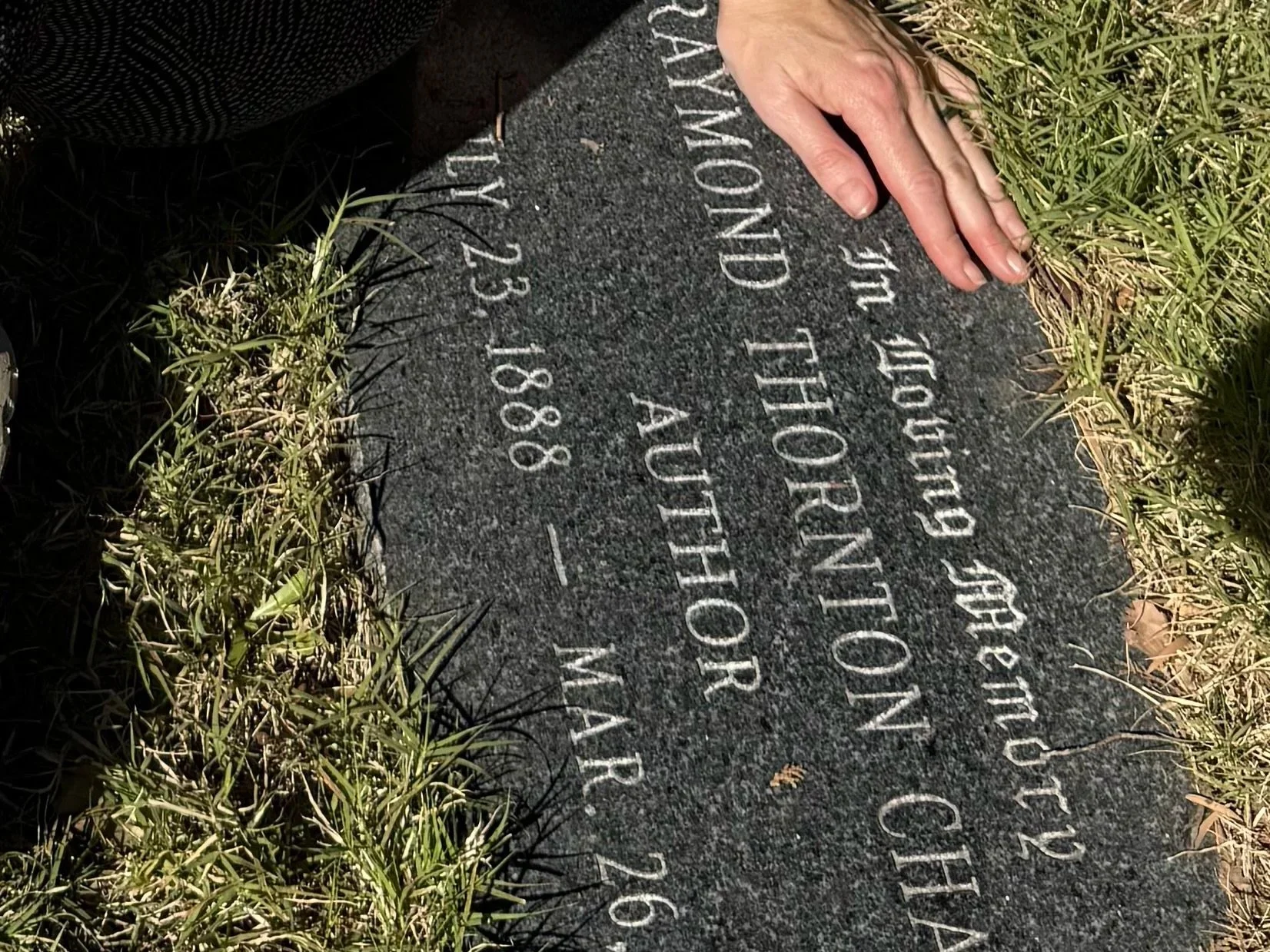
It is important to remember that it was these junior officers who suffered disproportionately high casualty rates in WWI. This was because their primary duty was to lead their men out of the trenches thus placing themselves directly in the line of machine-gun and artillery fire. As Raymond Chandler who fought at the front in a Canadian regiment commented, ‘Once you have had to lead a platoon into direct machine-gun fire, nothing is ever the same again.’ Many of these junior officers were young men who went directly from public school to training and then to the battlefield; their life expectancy was sometimes estimated at six weeks.
Owen himself served on the front line in France during two main periods: first from January to June 1917, during which he suffered shell-shock and was invalided out to Craiglockhart Hospital where he famously met and became friends with Siegfried Sassoon, and again from late August 1918 until his death in action on November 4, 1918. He was killed aged twenty five, just one week before the Armistice.
Sassoon said of Owen, ‘he pitied others, he did not pity himself’. This is borne out by his poetry, his concern is externally directed. Think of Strange Meeting where he meets an enemy soldier who recognizes him:
And by his smile, I knew that sullen hall, -
By his dead smile I knew we stood in Hell.
……
’Strange friend,’ I said, ‘here is no cause to mourn.’
’None,’ said the other, ‘save the undone years,
The hopelessness. Whatever hope is yours
Was my life also; I went hunting wild
After the wildest beauty in the world
…..
I am the enemy you killed my friend.
I knew you in this dark; for so you frowned
Yesterday through me as you jabbed and killed
We should remember Owen was no coward. He chose to return to the front in 1918, not out of any quest for personal glory but because he cared deeply for his men. He was awarded the Military Cross for his actions in October 1918. Incidentally, although it would have been impossible for the Canadian author L.M. Montgomery to have known about Owen when she wrote Rilla of Ingleside in 1919, I have always seen him in the beautiful character of Walter Blythe.
He seems to have entered the war with some sense of idealism. In one of his very early letters home to his mother he wrote ‘there is a fine heroic feeling about being France.’ However this mood swiftly vanished. In a subsequent letter three weeks later he wrote, ‘I have not seen any dead. I have done worse. In the dank air, I have perceived it, and in the darkness, felt’ (words underlined in original letter)
On the night of January 12 1917, Owen and his men endured an horrendous and freezing six mile march under machine-gun fire and heavy shelling, over a road already blown to pieces and through a flooded muddy trench where many of his men lost clothes, boots and equipment. Almost hallucinating with exhaustion, they found themselves in the middle of the poison gas attack which lies at the heart of Dulce et Decorum Est.
Dulce et Decorum Est is a tightly composed poem which moves through three main situations of horror: the night march, the mustard gas attack and recurring mental trauma. Each of these episodes serves to highlight the extremity of physical and mental suffering the soldiers endured. The entirety of the poem has a nightmarish quality; even aspects of the real appear surreal until we find ourselves locked into the actual dreaming mind of the narrator himself. When looked at as a whole, the effect of the poem is to force us into a brutal encounter with the human cost of the ravages of war pitted against the high ideals of the poem’s title phrase.
Bent double, like old beggars under sacks,
Knock-kneed, coughing like hags, we cursed through sludge,
Til on the haunting flares we turned our backs,
And towards our distant rest began to trudge.’
We are plunged in media res without any warning; Owen uses alliteration and assonance brilliantly to encase his searing similes, look at how the sound doubles back on itself to reinforce the soldiers’ stooping with exhaustion under their heavy packs: ‘Bent double, like old beggars’ The men are ‘knock-kneed’ and ‘like hags’, further alliteration and simile showing how these soldiers appear aged and frail, utterly lacking in vitality. At once our pity and fear for them is evoked.
The immediate and continual use of punctuation to disrupt the flow of the iambic pentameter in these first two lines, ‘bent double,’ ‘knock-kneed, coughing like hags,’ tells us that this is no glorious march springing from the martial poetry of ages past. This is a new dissonance, a staggering advance, mirroring the horror and carnage these men experience amidst the mechanization of war. These men are stumbling, falling, dying.
We see through their eyes. They turn away from the ‘haunting flares’, from the enemy lights which illuminate the scene, potentially exposing them, danger is ever present, but they are haunted. A suggestion of hypallage here -if we care to put a label on it- with ‘haunting flares’, the men are haunted by leaving the battlefield and perhaps fallen friends behind. Their rest is ‘distant’ we feel the endlessness of this journey, or does ‘distant rest’ have a darker tone, could it be a metaphor for death? The suffering is perpetual as the men ‘trudge’ ever onward.
Men marched asleep. Many had lost their boots,
But limped on blood-shod. All went lame; all blind
Drunk with fatigue; deaf even to the hoots
Of tired, outstripped Five-Nines dropping softly behind
These men are barely alive. The sounds soften into sibilance, echoing the men’s exhaustion. They ‘march asleep’, they are ‘drunk with fatigue’, their senses no longer function; leading them directly into harm’s way. They are ‘blind’ and ‘deaf’ and yet they march on. ‘All went lame; all blind’, Owen uses hyperbole deliberately here to drive home just how many men suffered devastating physical injuries during the war. When we first memorised this poem, the neologism ‘blood-shod’ stuck sorrow to my mind for days. It still does. How can one escape the sight of young soldiers, some of whom might have been barely fifteen, walking in shoes of blood? How can one not weep eternal tears?
Look at how Owen summons a split second pastoral idyll with the word ‘hoots’. Again during memorisation I was particularly struck by this word; I felt Owen’s connection to Keats and Ode to A Nightingale breathing. With ‘hoots’ we slip again into sibilance and momentary daydreams of owls and country evenings. We are lulled us into a false sense of security mirrored by the softening of the sibilance as we rush with enjambment unawares into the horror of the gas attack - all the worse because it happens quietly ‘dropping softly behind’.
Notice too the possible transferred epithet in the phrase, ‘of tired, outstripped Five-Nines’. It’s the men who are tired and outstripped; their exhaustion takes corporeal form. I think the hypallage possibility is overlayed with the sense that the shells are also tired. Five-nines were the 5.9 inch artillery shells used by all sides and also used to fire gas. Are the very weapons of war speaking of their exhaustion? Even the agents of destruction are crying out for the killing to cease.
Gas! GAS! Quick, boys!- An ecstasy of fumbling
Fitting the clumsy helmets just in time,
But someone still was yelling out and stumbling
And flound’ring like a man in fire or lime.-
Dim through the misty panes and thick green light
As under a green sea, I saw him drowning
Some of the most famous lines of war poetry here. From the slow quiet ending of stanza one, we slam into the danger of stanza two with desperate direct speech, exclamations and panic. Notice also the pathos of ‘boys’ which contrasts to the aged vocabulary of stanza one and is a suddenly unbearable reminder of the youth of these soldiers. There is no time. The punctuation is disjointed, the men are fumbling, the helmets are clumsy, the terror is so bright it can be described as ecstatic and there is no time at all.
But someone still was yelling out and stumbling
And flound’ring like a man in fire or lime.-
The focus narrows with unblinking intensity to the fate of the one soldier who couldn’t protect himself against the poisoned touch of the gas. The gas which burns, burns the lungs, destroying the body internally and externally. The continuous verbs, ‘yelling’, ‘stumbling’, ‘flound’ring’, shatter us. We see the soldier’s terrible suffering as if in slow motion and the similes of fire and lime create shadow images multiplying the horror exponentially.
This stanza moves from an overwhelming noise to a silence which is yet more terrifying in its isolation. Once the narrator has donned his gas mask, he can see only dimly. We feel that all our senses are muted and, staring into the past, we see just how rudimentary the soldiers’ equipment was. Owen begins with a simile: the dull panes of the gas mask and the waves and color of the gas cause him to see dimly ‘as under a green sea’ but this simile then solidifies into a metaphor. The soldier is literally ‘drowning’ as the gas fills his lungs in the same way that water would.
In all my dreams before my helpless sight,
He plunges at me, guttering, choking, drowning
There is no escape to be had. We too see through ‘helpless’ eyes and we are trapped in an endless loop of horror and guilt as we see the soldier dying over and over again. Notice how Owen switches to the present tense to convey this sense of imprisonment in the experience. He choses to separate these two lines from stanza two but indicates continuity between the traumatic past and the traumatic present by following through with the rhyme scheme.
If in some smothering dreams, you too could pace
Behind the wagon that we flung him in,
And watch the white eyes writhing in his face,
His hanging face, like a devil’s sick of sin;
If you could hear, at every jolt, the blood
Come gargling from the froth-corrupted lungs,
Obscene as cancer, bitter as the cud
Of vile, incurable sores on innocent tongues,—
My friend, you would not tell with such high zest
To children ardent for some desperate glory,
The old Lie: Dulce et decorum est
Pro patria mori.
Owen’s eye ‘blinks at nothing; conceals and equivocates over nothing’ Parsons commented. His terrifying honesty leads us into the final lines of the poem about which there is ‘nothing pretty or elevating.’ Still trapped inside the ‘smothering dreams,’ gasping for breath ourselves, we now witness the unspeakable suffering of the young soldier as he lies dying after the attack. Notice too the deliberate diction of ‘flung’ which illuminates the universal brutalization. Death, even horrific death has become totally commonplace. The soldier’s eyes ‘writhe’, yet eyes cannot writhe. This impossible vision, straight from hell itself, is hurled at the ‘you’ who is addressed three times in the final stanza with increasing stridency and condemnation.
The impossible visuals take further shape in the first simile, mirroring the untenable horror of this situation. The soldier’s face is ‘hanging’ ‘like a devil’s sick of sin’ how could the devil ever be tired of sin? Similarly, how can the nature of this experience ever be assimilated by humans? (A question which my study of much of the 20th century and the modern day has led me to ask myself often).
If you could hear, at every jolt, the blood
Come gargling from the froth-corrupted lungs,
Obscene as cancer, bitter as the cud
Of vile, incurable sores on innocent tongues-
Our sense of hearing is now yoked into confrontation with the horror. The soldier’s lungs and mouth have been torn to pieces, shredded by the mustard gas and his death rattle splatters onto the page with the distressing onomatopoeia of ‘gargling’. The unnatural nature of his fate is conveyed in the similes ‘obscene as cancer’ ‘bitter as the cud’. The contrasting blamelessness of the soldier is hammered home with the word ‘innocent’
My friend, you would not tell with such high zest
To children ardent for some desperate glory,
The old Lie: Dulce et decorum est
Pro patria mori.
We come to the crescendo of the poem, the direct address to ‘my friend’. We know that the poem was originally dedicated to one Jessie Pope, a contemporary poetess who had the habit of handing out white feathers and writing enthusiastically high spirited pro-war poetry, often read by children, such as ‘Who’s for the Game? and the collection ‘Simple Rhymes for Stirring Times’ (1915). However subsequently Owen erased this dedication and intended the ‘you’ of the final stanza to stand for anyone who believed in the war as great or good. As indeed he indicates when he says cynically,
The old Lie: Dulce et decorum est
Pro patria mori.
In order to understand Owen’s decision to employ this allusion to Horace’ Roman Odes 3.2, it is of critical importance to be aware of the extent to which this phrase had been commandeered by British authorities, the press and recruitment propaganda to promote WWI, particularly during the early days. It had been given a life of its own, extracted from the cultural milieu in which it was composed; a galaxy away from the industrial slaughter that Own and his contemporaries were facing.
I would like to spend a moment here in the classical world lest anyone is left with a misunderstanding. While I have no intention of engaging in facile and anachronistic readings of time past - it is certainly true that, in the world to which Horace belonged, it was established tradition and practice to view self-sacrifice for one’s country as noble, honorable and indeed sweet - it is important to note that our ancient Western poets demonstrated a deep awareness of war’s sorrows and terrible sufferings.
In Odes 3.2, immediately before the famous line which Owen quotes, Horace pictures, in Iliadic style, the enemy queen gazing down from the battlements with her daughter who worries about the fate of her betrothed as he faces the Roman warrior.
And seeing him, from
the enemy’s walls, let the warring
tyrant’s wife, and her grown-up daughter, sigh:Ah, don’t let the inexperienced lover
provoke the lion that’s dangerous to touch,
whom a desire for blood sends raging
And, in fact immediately after the famous exhortation, Horace moves on to reflect that death comes for all men, for those who flee in battle or remain happily at peace away from war. Such is the importance of understanding context!
Similarly Virgil’s Aeneid is traced in tears. Think of Nisus and Euryalus, to pluck one example from the throng:
But while he (Nisus) begged,
the sword goes plunging clean through Euryalus’ ribs,
Cleaving open his white chest. He writhes in death
as blood flows over his shapely limbs, his neck droops,
sinking over a shoulder, limp as a crimson flower
cut off by a passing plow, that droops as it dies
or frail as poppies, their necks weary, bending
their heads when a sudden shower weighs them down (Aeneid IX. 431-437)
or reflect upon the personal price Aeneas has to pay in the sack of Troy. Perhaps we could call to mind the fate of Priam and his family as painted by Virgil with a horror and pathos so entwined it leaves us wordless or remember Patroclus or Astyanax or Hector and Andromache in the Iliad. Or we could pay an Odyssean visit to the greatest warrior of them all, Achilles, where he languishes in the underworld and hear his lament. Thus the cost of war was shown unflinchingly.
In my reading of Owen so far, I’ve come to see that alongside the empathy, and vital humanity which first drew me to his work, there walked a burning sense of moral indignation at the ugliness of contemporary war. He saw it without any veils or mediation. He understood, to quote Parsons, ‘while the War was still actually in progress, the forces really at work behind the multitude of conflicting noises…indeed, the whole gamut of self-deception which inevitably accompanies war on a large scale.’ The clarity of this indignant vision fused with his pity gave his work its distinctive characteristic; a sympathetic beauty which is both tragic and terrible.
In concluding we should remember the stark truth that the First World War was the first conflict which saw the mass production of factory manufactured death. The prior Industrial Revolution and developments during the war itself conjured up destruction, carnage and horror on scale unimaginable to the generation whose task it was to endure it. It is estimated that up to ten million soldiers died during the course of the war. That is an average of six thousand deaths per day. On the first day of the Battle of the Somme 19,240 British soldiers were killed which remains the bloodiest day in British military history.
When we think of the pre-industrial warfare of earlier times, it seems that we are looking back into an innocent world that has vanished never to return. It is easy to understand how a highly sensitive and intelligent mind like Owen’s could have entered the war with a ‘fine and heroic’ feeling and have been transformed by his experience into the poet who wrote the tragically and terribly beautiful Anthem for Doomed Youth where I will pause, with the promise to return.
What passing-bells for these who die as cattle?
— Only the monstrous anger of the guns.
Only the stuttering rifles' rapid rattle
Can patter out their hasty orisons.
No mockeries now for them; no prayers nor bells;
Nor any voice of mourning save the choirs,—
The shrill, demented choirs of wailing shells;
And bugles calling for them from sad shires.What candles may be held to speed them all?
Not in the hands of boys, but in their eyes
Shall shine the holy glimmers of goodbyes.
The pallor of girls' brows shall be their pall;
Their flowers the tenderness of patient minds,
And each slow dusk a drawing-down of blinds.