Today and Tomorrow and Yesterday Too
The shades of life’s colours as it paints its vanishing way around us have been much on my mind these days. I’ve been living in various arenas through both my personal reading and the literature we’ve been studying in the schoolroom.
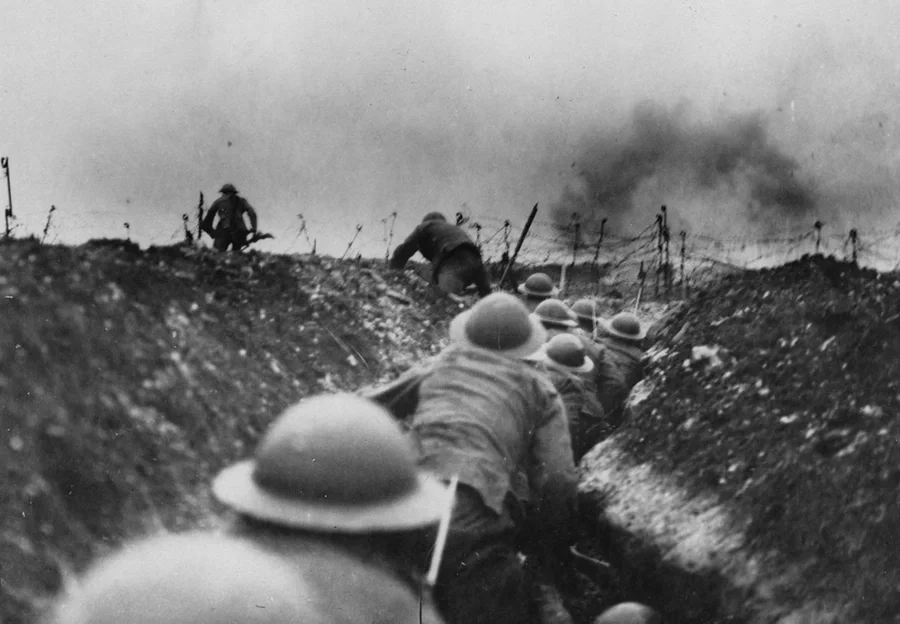
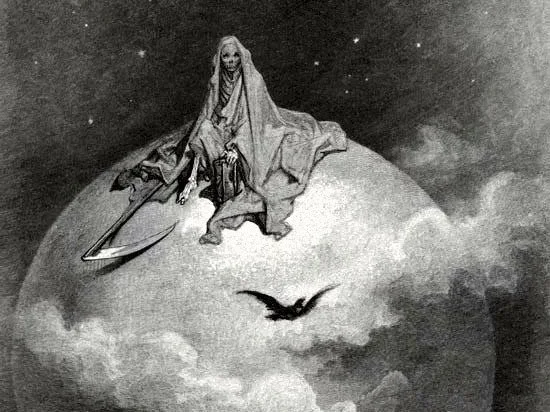
The significance of the passage of human time through wonderful biographies of Raymond Chandler and Jane Austen. The landscape of grief, terror and madness through our memorisation of Edgar Allen Poe’s The Raven. The man-made hellscape of World War I with Wilfred Owen’s choking nightmare, Dulce et Decorum Est and then, grimmer still, the journey into the language defeating world of the Shoah. This piece is an introduction to topics I will pick up over coming weeks.
There’s a ceasless softness to silence sometimes. We turned a corner recently and found ourselves floating through cotton candy clouds of stillness. We could have dived right into the middle and never hit bottom. It passed of course, as all things do in our fleet-footed realm.
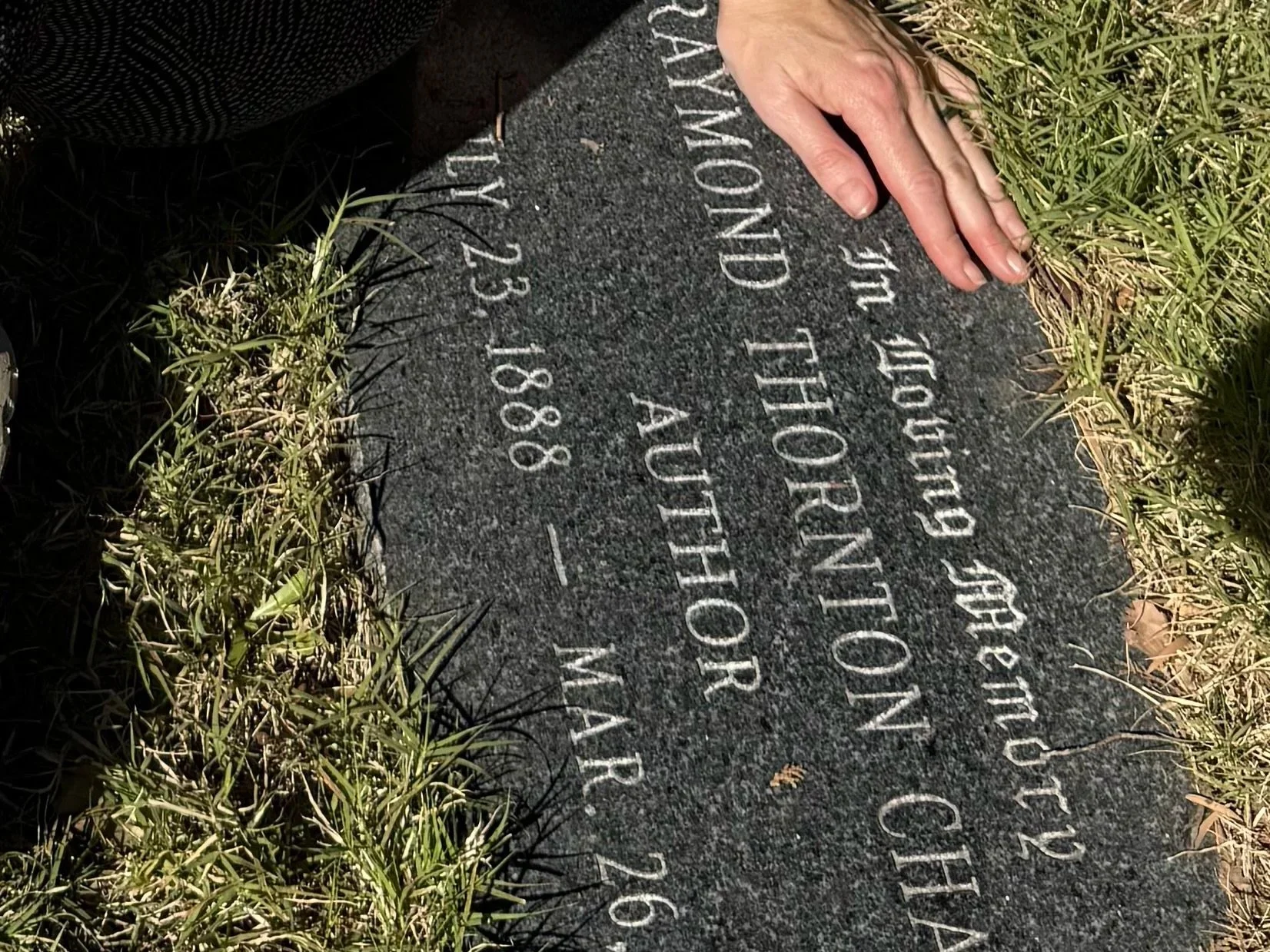
We visited with the silence last week at Raymond Chandler’s grave in Mount Hope Cemetery in San Diego. It was a sunny morning as we strolled through the sprawling graveyard armed with a map. After several wrong turns, we found his ashes resting quietly and lingered awhile, taking it all in. It is a powerful thing, to sit beside the grave of a figure with whom you feel a connection; even though you never met. If you’re in the right place, you can feel the ‘music heard faintly on the edge of sound.’ So I sat thinking about that moment in The Long Goodbye where Chandler touches the transcendent.
You bought a lot of me, Terry. For a smile and a nod and a wave of the hand and a few quiet drinks in a quiet bar here and there. It was nice while it lasted. So long, amigo. I won’t say goodbye. I said it to you when it meant something. I said it when it was sad and lonely and final.
Life reeks with sorrow and drowns us with its tears. Broken moments striated with jagged edges of torn dreams and hopeless longings. Chandler knew this. He lived it, especially after the passing of his beloved wife Cissy. Phillip Marlowe is steeped in it and yet never once allows it to compromise him. You can’t read Tom Hiney’s biography and come away without some understanding of the significance of Chandler and his true standing amidst his contemporaries.
From one English genius to another and I entered the enchanting world of Jane Austen conjured up by Lord David Cecil. Words fail me a little here. My daughter and I have a very special corner of our hearts reserved for Miss Austen and her gallery of characters. Slow reading our way through her novels aloud has allowed us to live amidst her worlds and among her words quite happily these four years and more. My son too has been an astute reader of Austen for some time and our conversations on various aspects of her work are an absolute delight. While reading Cecil’s book I felt sure Jane was just hovering somewhere near by, so vividly did she and her milieu emerge.
We fell under Poe’s spell quite accidentally. His El Dorado appeared in an anthology for analysis during a poetry lesson. As is often the way in my schoolroom, it was but a foot note, a hop, skip and a jump into the world of The Raven with all of its terror and imaginings. Now we are immersed in the tremendous fun of memorisation. Due to its wonderful rhyme and meter, trochaic octameter no less, it’s a poem that you can’t help but chant out loud in a performative fashion! It gallops off the tongue and into the memory with an eerie ease.
We arrived with Wilfred Owen and Dulce et Decorum Est during a history class on WWI. I studied this poem as a young girl and it has stayed with me always. As ever my heart is sorrow-struck at the utter waste of young life this period engendered.
But someone still was yelling out and stumbling
And flound’ring like a man in fire or lime.—
Dim through the misty panes and thick green light,
As under a green sea, I saw him drowning.In all my dreams before my helpless sight,
He plunges at me, guttering, choking, drowning.
We memorised this poem too and thus experienced the visceral reaction which Owen demands from his reader. Around the same time I happened to be listening to Seamus Heaney’s 1995 Nobel Lecture and I was struck by these words which I quote in full here:
Later on I would find a different kind of accuracy, a moral down-to-earthness to which I responded deeply and always will, in the war poetry of Wilfred Owen, a poetry where a New Testament sensibility suffers and absorbs the shock of the new century’s barbarism.
Walking with Owen down those nightmare tracks led me, in my personal work, straight back to a topic I have been gradually studying for several years now. Recently, while listening to Nikolaus Wachsmann’s authoritative work KL, I discovered the immense scholarship of Lawrence Langer and am currently awaiting his essay on Claude Lanzmann’s Shoah. I first watched this film three years ago, having heard it name-checked on the Rest is History, and thus began a voyage into the heart of a darkness so black it loses all colour.
There is one other aspect of the passage of time which is much on our mind as a family, one aspect of our routine whose rhythm is changing with the inevitability of sorrow’s approach. The hound moves more slowly these days. In the week of his thirteenth birthday he’s no longer the springy boisterous youth he once was. Walks are shorter in distance but somehow longer in time, the pauses more frequent and no longer can he accompany my daughter and I on our memorisation rambles. But like Keats’ bright star his steadfastness never wavers; the love for his family burns as bright as ever within his faithful heart. The eyes might be sleepier but he remains forever our beloved watchman.
And so to end as we began at the very beginning with my favourite of them all…
Today and tomorrow and yesterday too
The flowers are dying like all things do
Follow me close - I’m going to Bally-Na-Lee
I’ll lose my mind if you don’t come with me
I fuss with my hair and I fight blood feuds . . . I contain multitudes